

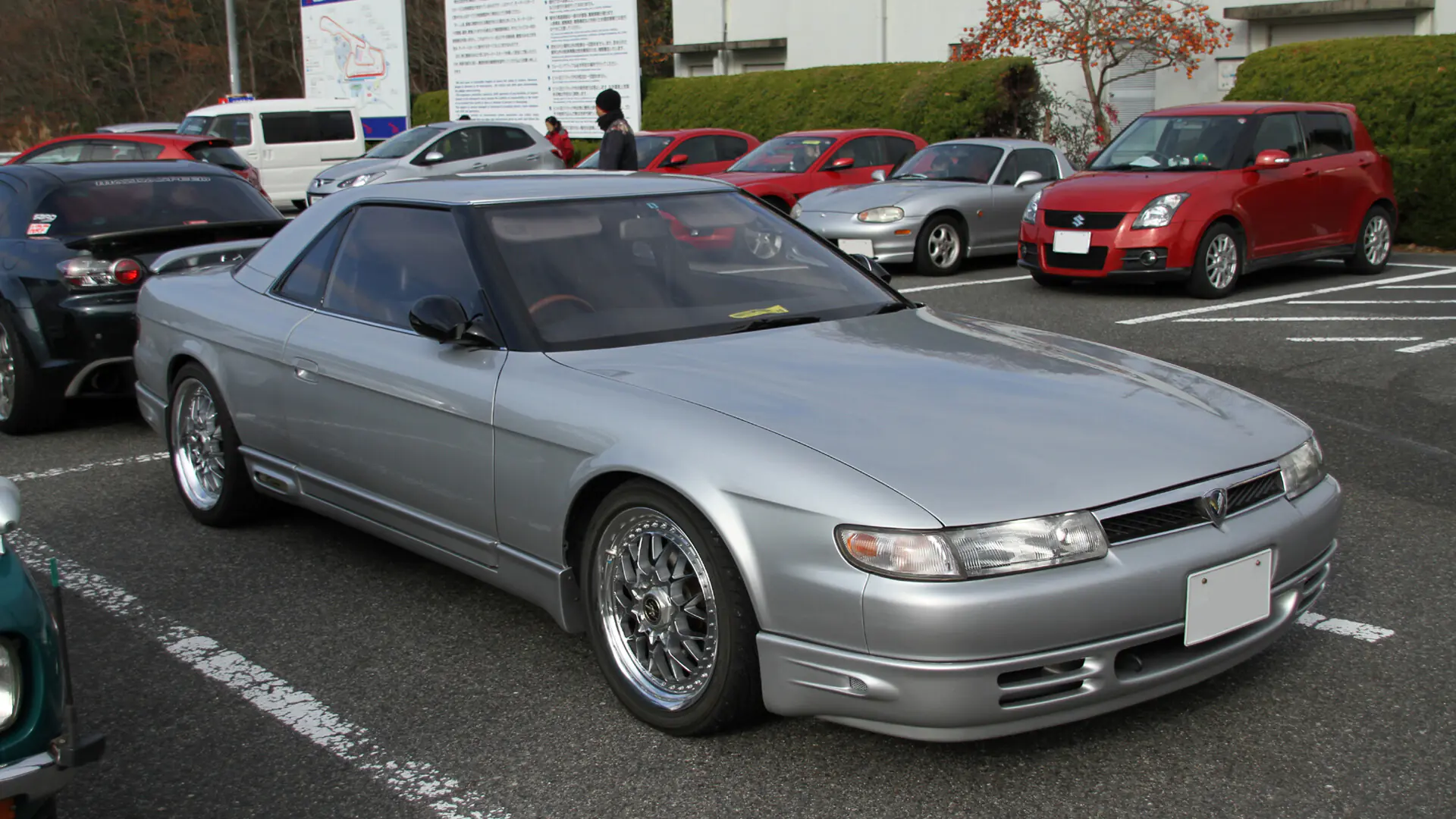
The Eunos Cosmo 20B is easy to define and hard to price. Mazda built 8,875 Cosmos for the Japanese market between 1990 and 1995, and roughly four in ten carried the 20B-REW, the only three-rotor engine ever fitted to a production car. The engineering case is settled. The market case is not: the car was never sold new in North America, only a handful of examples trade publicly each year, and the gap between a documented, low-mileage car and a modified one is far wider than the badge suggests.
That makes this a Deep Dive rather than a speculative “future collector” piece. The Cosmo has been collectible among rotary and JDM enthusiasts for years. What remains open is how much of that enthusiasm turns into durable prices, so this article keeps established collector value and speculative potential on separate ledgers.
Why Mazda built a three-rotor flagship
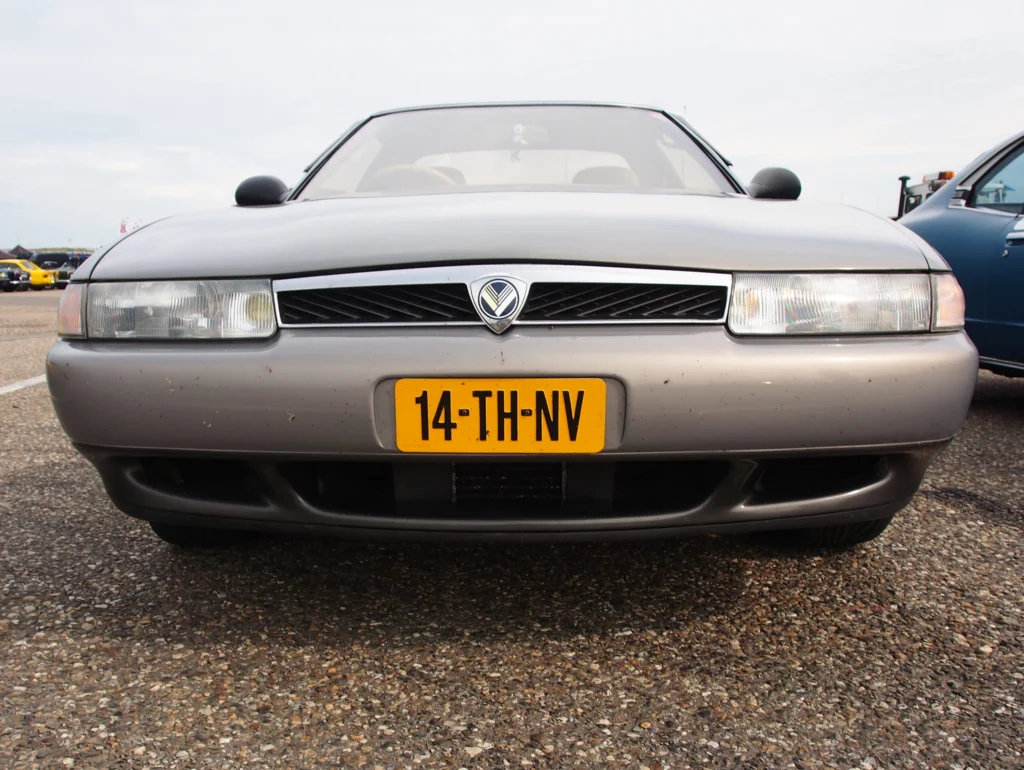
Mazda launched the Eunos brand in 1989 as an upmarket sales channel, and the 1990 Cosmo was its halo. The Truth About Cars describes the brand as Mazda’s answer to Lexus and Infiniti, while Wikipedia’s Cosmo entry notes that the car grew loosely from the 1985 MX-03 concept and was meant to anchor a planned Amati brand in the United States. Neither plan reached North America, and Japan’s bubble economy collapsed just as the car arrived.
The name carried real weight. The original Cosmo Sport of 1967 was Mazda’s first two-rotor production car, and the company’s rotary story runs through our look at the Wankel rotary’s legacy to the 787B that won Le Mans, which we covered in Mazda’s Le Mans-winning 787B heading to Monterey. The 1990 Cosmo was the last time Mazda put that engineering ambition into a luxury coupe. Japanese Nostalgic Car reports a new price of ¥3.3 million for the two-rotor Type-S and ¥5.3 million for the top 20B Type-E with navigation, which it calls Mazda’s most expensive production passenger car to that point.
Production numbers: what is verified and what is not
The 8,875 total is consistently reported, and Mazda lists it. What Mazda has not published, according to JDMBuySell’s JC guide, is a split between engines. Common estimates put the two-rotor 13B at about 60 percent and the 20B at about 40 percent. Mazda’s own recall 592, which covers 8,853 cars, gives a rough cross-check: 4,536 E-JC3SE and 380 E-JC3S two-rotor cars (4,916 in total) against 3,568 E-JCESE and 369 E-JCES three-rotor cars (3,937 in total). A recall population is not a production ledger, so treat roughly 3,900 20B cars as an order of magnitude, not a count.
Timing matters too. Production ran from February 1990 to September 1995, and Japanese Nostalgic Car reports that close to half of all sales came in the first year, with 1995 volumes in the triple digits. The recall list shows only 749 cars with the later no-suffix codes (E-JC3S and E-JCES), which is consistent with late cars being a small slice of the total.
Eunos Cosmo specifications
| Item | 20B-REW (three-rotor) | 13B twin turbo (two-rotor) |
|---|---|---|
| Displacement | 1,962 cc | 1,308 cc |
| Induction | Sequential twin turbo | Sequential twin turbo |
| Rated power | 280 PS (206 kW) at 6,500 rpm | 230 PS (169 kW) at 6,500 rpm |
| Rated torque | Roughly 400 N·m (about 297 lb-ft) | 30.0 kgf·m (294 N·m) at 3,500 rpm |
| Transmission | Four-speed automatic only | Four-speed automatic only |
| Drive | Rear-wheel drive | Rear-wheel drive |
| Weight | 1,610 kg (Mazda booklet) | 1,490 kg (Type SX catalogue) |
| Body | 4,815 × 1,795 × 1,305 mm, 2,750 mm wheelbase | Same |
Figures come from Mazda catalogue data as reported by JDMBuySell, plus Wikipedia’s summary of period sources. The 280 PS rating reflects Japan’s informal “gentleman’s agreement” cap, and several secondary sources suggest actual output was higher, but no verified dyno or factory figure exists, so we treat 280 PS as the number of record. Secondary sources cite a 0–60 mph time of roughly six to six and a half seconds; that is not a factory claim.
What makes it mechanically unique
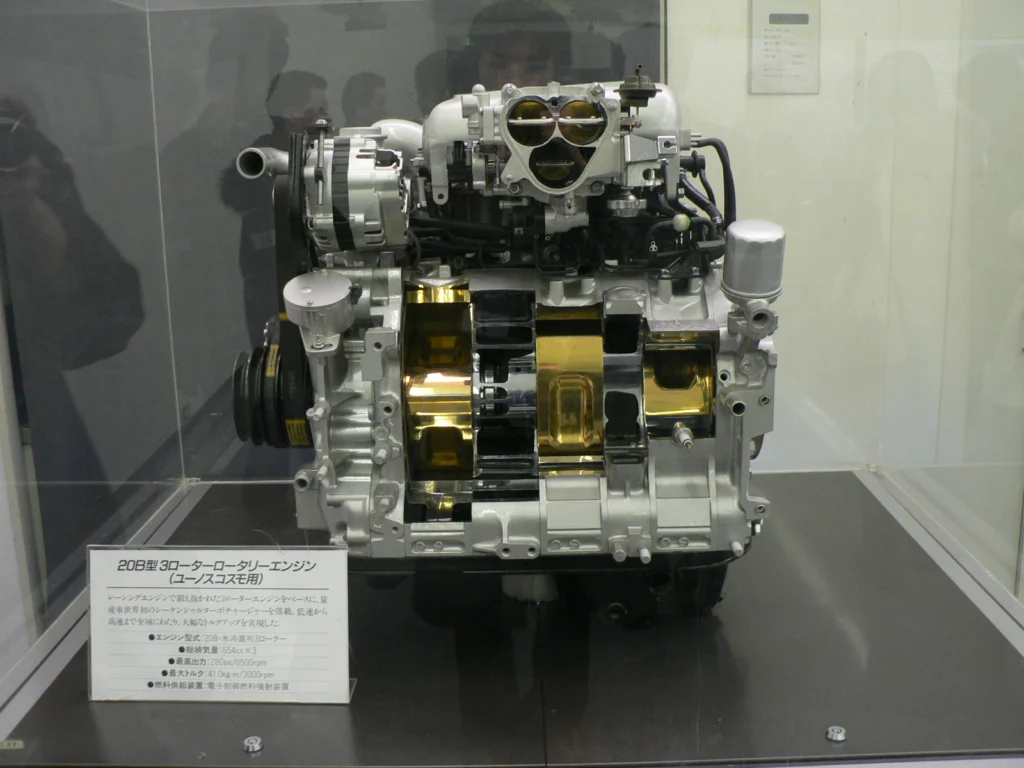
No other manufacturer has sold a three-rotor engine in a production car, and Mazda never used the 20B in another one. Both Cosmo engines used sequential twin turbochargers, which Wikipedia, citing Brinker and Vernis’s Japan’s Most Astonishing Automobiles, describes as the first Japanese series-production sequential twin-turbo system. The smaller turbo works at low revs and the second joins as load rises.
The other signature was the Car Communication System, or CCS: a colour CRT touch screen that handled navigation, climate, audio, television and a mobile phone. It is widely described, including in a 2012 Motor Trend piece cited by Wikipedia, as the first factory-installed GPS navigation system in a production car. The gauges were LCD-rendered analogue needles. That electronic ambition is part of the appeal today, and also part of the ownership risk.
Identifying a real 20B, and which options matter
The Cosmo is right-hand drive and automatic only, so any manual gearbox is a conversion. The chassis code tells you the engine: JCES and JCESE indicate the 20B, while JC3S and JC3SE indicate the 13B. Wikipedia places the suffixed codes in Series I (1990–93) and the unsuffixed ones in Series II (1994–95). Trim levels were Type-S (firmer suspension, cloth inserts) and Type-E (softer suspension, full leather), with a Type SX appearing in catalogues from September 1991. JDMBuySell’s advice is to match the grade against catalogue dates rather than trusting a badge.
CCS was optional on the Type-E and, per the catalogue, was fitted to the Type-S from March 1994. A working CCS car with its original screen is therefore a meaningful marker, not just an option box ticked.
What collectors have actually paid
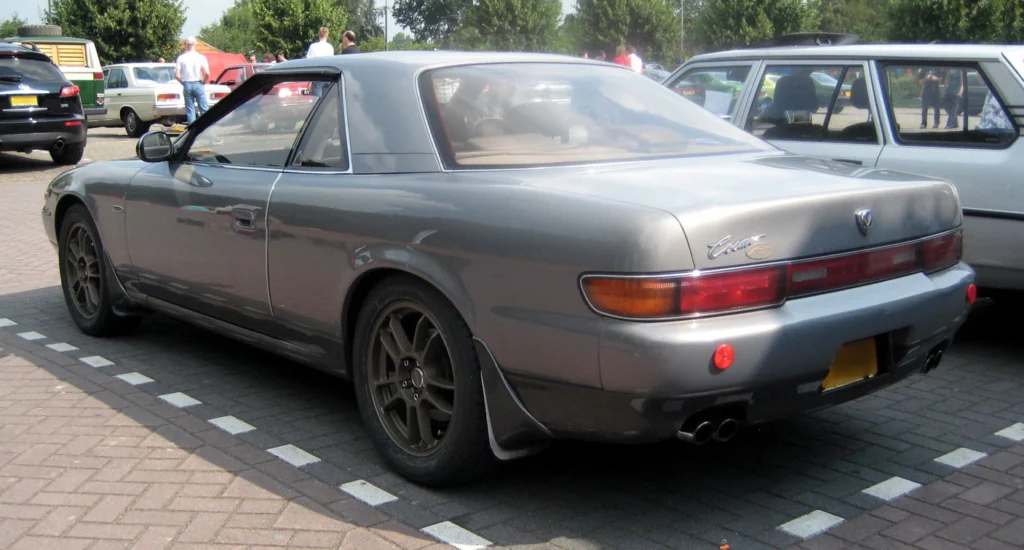
Public data is thin, and every figure below comes from a secondary aggregator. Values on The Classic Valuer are shown in pounds as converted by that site, and Collecting Cars hides final prices from logged-out visitors, so the AUD figure is the one reported by Classic.com.
| Date | Car | Venue | Result |
|---|---|---|---|
| 6 Jul 2020 | 1991 Eunos Cosmo 20B, RHD, aftermarket 17-inch wheels, some non-functional gauges; 2019 Amelia Island “Best Import” | Bring a Trailer | £11,397 |
| 26 Jan 2022 | 1990 Eunos Cosmo 20B | Collecting Cars (Australia) | £21,941 |
| 19 Dec 2022 | 1992 Eunos Cosmo 20B | Collecting Cars (Australia) | £28,521 |
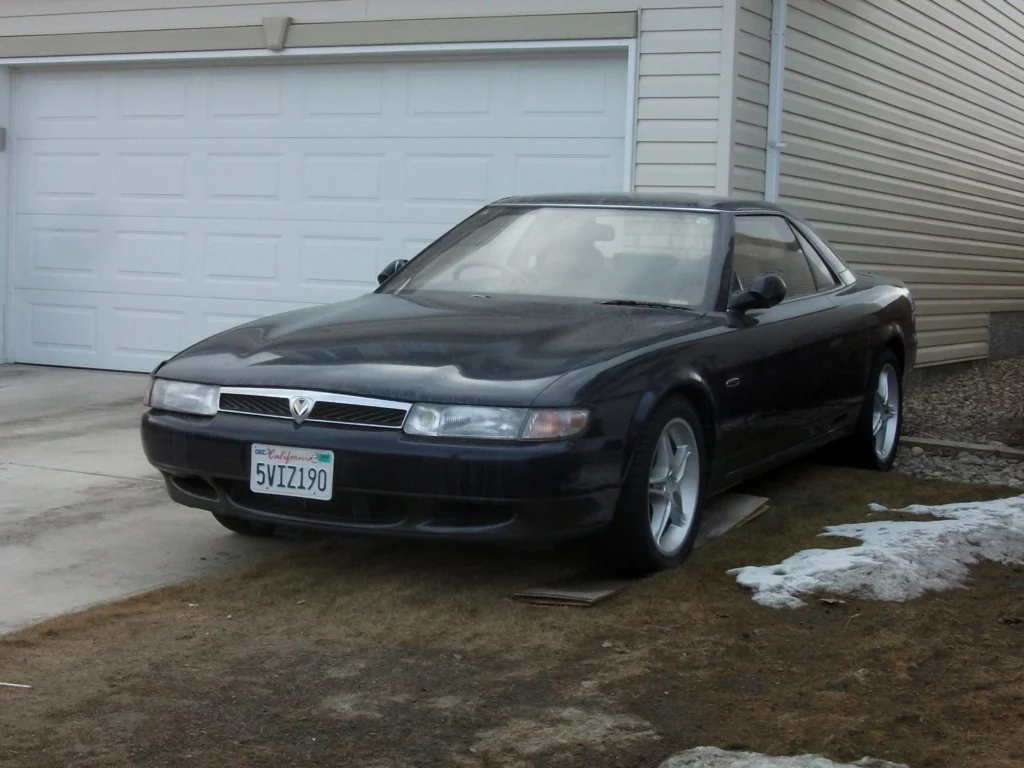
| 30 Dec 2025 | 1992 Eunos Cosmo 20B, 14,903 km, black with cream interior, BBS wheels and coilovers | Collecting Cars (Melbourne) | AUD 48,000 |
| 27 Mar 2026 | 1991 Eunos Cosmo, three-rotor, about 50,100 miles, US title | Cars & Bids | Not sold; high bid $16,000 |
| Feb–Aug 2026 | Five Virginia dealer listings (Duncan Imports & Classics) | Fixed price | Last asking $20,433–$29,777; sales not confirmed |
Classic.com’s market benchmark for the JC series sits at $24,574, a calculated figure rather than an average of sales. Its page also shows how little data there is to calculate from.
The reasonable reading is cautious. One low-mileage 20B reached AUD 48,000 in the same year another 50,000-mile example stalled at a $16,000 high bid, and a Japanese-market import with aftermarket wheels and quirks sold for about £11,000 in 2020. Condition, mileage and documentation are setting price far more than the “only three-rotor” story, and a handful of results does not establish a trend.
Ownership costs and known weak points
Rotary maintenance is the central cost. We could not find a reliable, verified rebuild figure: online estimates vary widely and most are unsourced. Ask any seller for compression-test records and invoices from a rotary specialist, then get a written quote before assuming a rebuild budget. Specialists do list 20B rebuild kits, so the engine itself is serviceable; the harder categories, by owner reports, are body and trim parts, headlamps and the CCS electronics.
Specific, documented items include recall 592, an air-conditioning circuit fuse of inappropriate capacity that Mazda remedied by adding a 10 A fuse; ask for proof it was done. Motor Trend told JDMBuySell that turbocharged rotaries do not tolerate detonation, so ask about fuel and tuning history. Failed instrument displays turn up in owner accounts and sale listings, including the “non-functional gauges” on the 2020 Bring a Trailer car. The Wheels road test cited by Wikipedia noted heavy fuel consumption, and Motor Trend noted almost no rear legroom.
Registration is a practical hurdle. In the United States the 25-year exemption runs from build month, and the last documented Cosmo was built on 6 September 1995, so all of them now qualify. The EPA age exemption expects the original engine configuration or an equivalent EPA-certified replacement, and state rules vary, so confirm eligibility on a car’s own paperwork before buying.
What separates exceptional examples from average ones
From the sales above, the pattern is consistent. The best cars are three-rotor, unmodified, with the original automatic, original wheels and a working CCS and gauge cluster, plus export and import paperwork and a documented rotary service history. Low mileage matters most when it is backed by invoices, as with the 14,903 km Melbourne car. Average examples are the ones with swapped wheels, replaced or tuned engines, patchy history and unfixed electronics. Be especially wary of any claimed manual conversion, which Mazda never offered, and of a mismatch between the chassis code and the engine fitted.
Competing vehicles
Mazda aimed the Cosmo at the Toyota Soarer, and the comparison still frames the buyer’s choice. According to JDMBuySell, the Z30 Soarer offered a 280 PS 1JZ-GTE turbo six, with a five-speed manual on the 1992 Twin Turbo L, and a 260 PS 1UZ-FE V8 in the UZZ31. The Lexus SC is a related export car, not the same specification. The Soarer buyer gets more drivetrain choice; the Cosmo buyer gets a one-of-a-kind engine and a far smaller pool of cars. Buyers shopping the Japanese performance end of the market can see where the Cosmo sits against our Toyota Supra Mk IV collector spec sheet and first-generation Acura NSX spec sheet, both of which have deeper price histories. Mazda’s newer cars are covered in our piece on the ND MX-5.
Established value versus speculative potential
Established: the Cosmo is the only production three-rotor car, a technical landmark with a following that extends into rotary swaps, the 787B’s halo and a cult built on Japanese-market nostalgia. Its availability to US buyers is now legal and ongoing, and the best cars have drawn real money.
Speculative: everything about future appreciation. What could strengthen demand is a growing pool of eligible buyers, more documented low-mileage survivors reaching public auction, and continued interest in 1990s Japanese technology. What could weaken it is the automatic-only, right-hand-drive format, thin parts and specialist support, rotary maintenance risk, and a market where a $16,000 high bid can fail to sell a decent car. We are not predicting a direction; the evidence supports a niche with a strong narrative and an unproven price floor.
Bottom line
The Eunos Cosmo 20B is worth a collector’s attention because its significance is documented and its market is still being discovered. The sensible approach is to buy the documented car, not the story: three-rotor, unmodified, with service records, working electronics and clean import paperwork, and to treat any price as one data point in a very small sample.
Sources and verification notes
Specifications and production were cross-checked between JDMBuySell’s JC guide, Wikipedia, Japanese Nostalgic Car and The Truth About Cars. Market data comes from The Classic Valuer, Classic.com and the Collecting Cars listing. We could not access Mazda’s own archives, so engine-split and performance figures are labelled as estimates where they are not manufacturer data.
The collector car market, every weekday morning.
Auction results, price moves and what’s crossing the block, read in four minutes. Free, from Modern Car Collector.
No spam, unsubscribe in one click. Or read more about the Brief.


 Shawn Henry
 John Lloyd