

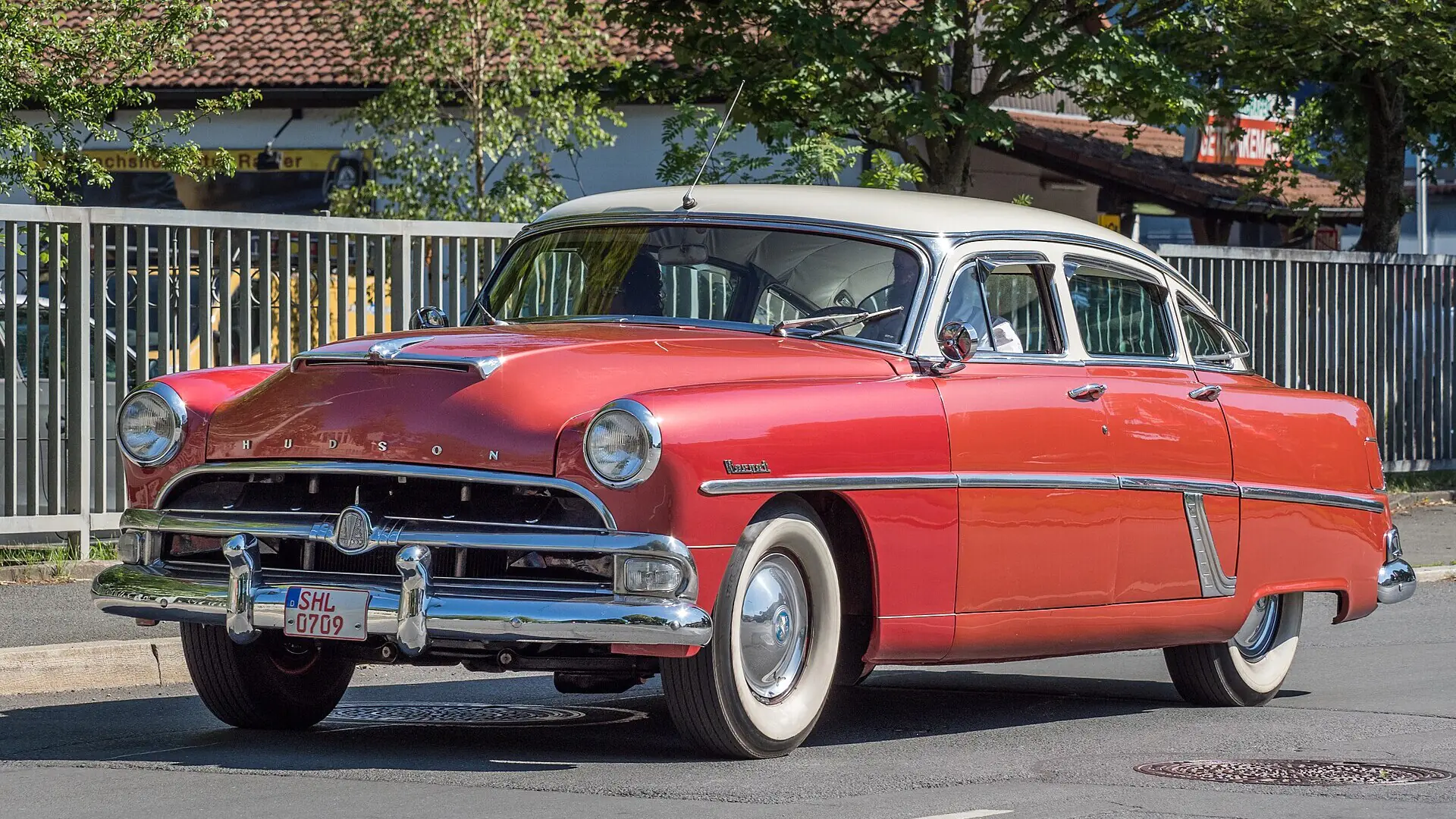
On October 29, 1954, the last step-down Hudson left the line in Detroit. The company that built it had spent six years proving that an independent automaker could out-engineer, and for a time out-race, rivals many times its size. Hudson badges would survive three more model years on Nash-based cars, but the machines collectors actually chase were finished.
What happened on October 29, 1954
Hudson had merged with Nash-Kelvinator on May 1, 1954, creating American Motors Corporation. The Automotive History Foundation records that the last true Hudson left the factory on October 29, 1954, and Hagerty’s automotive history calendar and Mac’s Motor City Garage likewise date the end of step-down production to that day. A few references, including Old Cars Weekly, put the final Detroit-built car a day later, on October 30, so anyone documenting a specific car’s build should look for the factory paperwork rather than rely on a single calendar entry.
For 1955 through 1957, Hudson-badged cars were Nash-derived products built in Kenosha, Wisconsin. The last Hudson of any kind rolled off the line on June 25, 1957. The large Hudson plant on Jefferson Avenue in Detroit was abandoned after the merger. If you want an earlier chapter of the marque, our look at a restored 1938 Hudson Terraplane pickup shows what Hudson was building before the step-down era.
The car that was ending
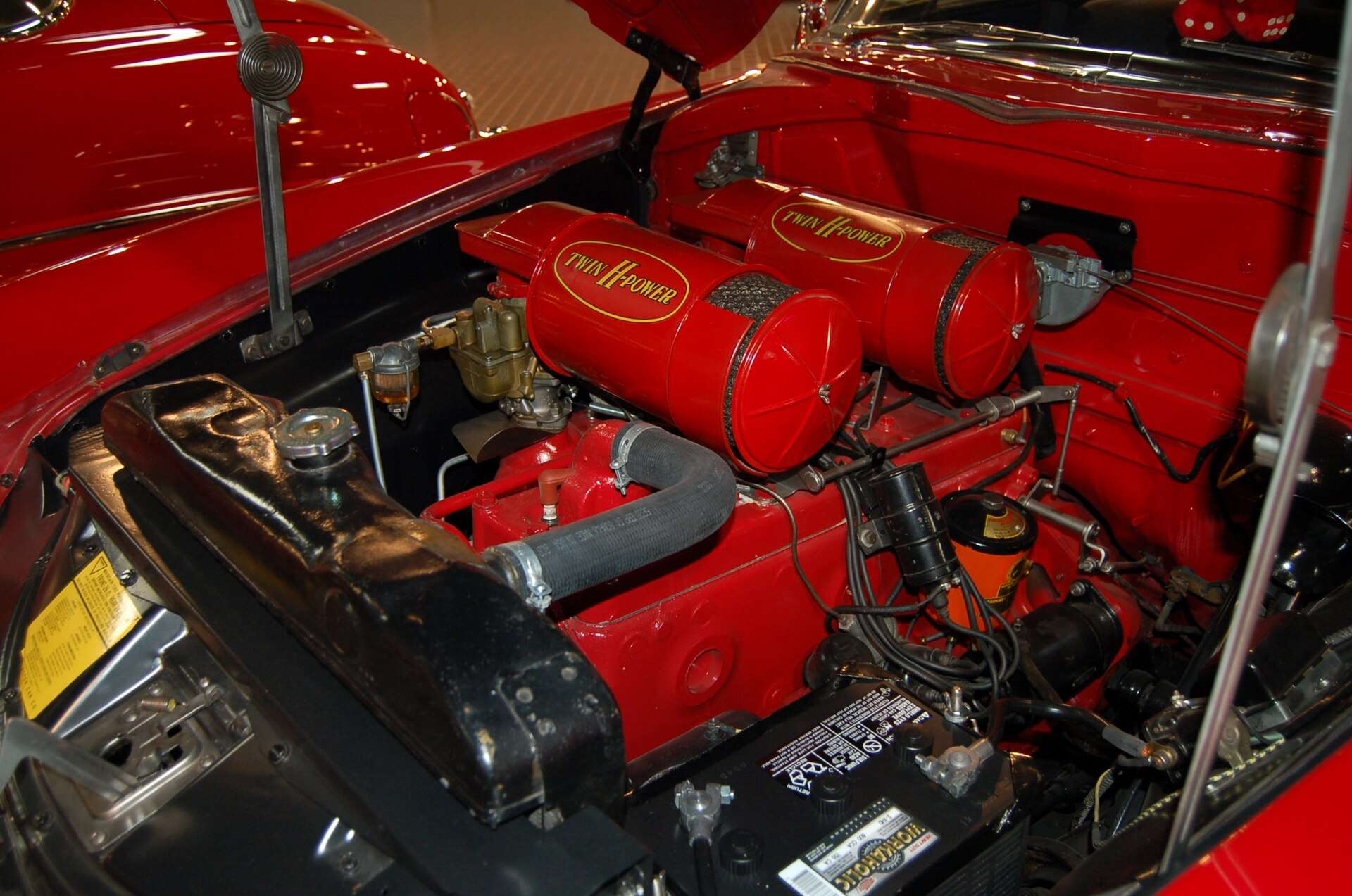
Hudson introduced its step-down body in 1948. The passenger compartment sat down inside the frame perimeter, lowering the center of gravity and giving the cars a low, planted stance that the Automotive History Foundation calls a precursor to modern unibody construction. The Hornet arrived in 1951 with a 308-cubic-inch L-head six, and its Twin H-Power dual-carburetor setup was a dealer option from mid-1951 at $85.60 before becoming a factory offering. By 1954 the base engine made 160 horsepower, the Twin-H version 170, and the 7-X racing engine, sold through the parts department, reportedly produced more than 210.
The 1954 model year had opened on October 2, 1953, with a restyle that borrowed from the compact Jet: a one-piece windshield, a flattened hood with a broader simulated scoop, a revised grille, and the first power steering and power brakes offered on a Hudson. Production was modest. Old Cars Weekly counts 24,833 Hornets and 11,603 Wasps for 1954, against 43,666 Hornets in 1951. The Jet was dropped because AMC’s Rambler made it redundant.
Why it mattered at the time
The Hornet had made Hudson a racing name. According to Allpar’s season tallies, Hudsons won 27 of 34 NASCAR Grand National races in 1952, and Old Cars Weekly credits the make with 17 wins in 1954, more than any other. Marshall Teague, driving what became known as the Fabulous Hudson Hornet, took the 1952 AAA stock car championship. That legacy is why a 1951 Hornet became the model for Doc Hudson in Pixar’s Cars, voiced by Paul Newman.
The racing success sat alongside a financial problem. Hudson lacked the working capital to tool a new platform, and by the early 1950s it could not afford an overhead-valve V8 to compete with the engines arriving from Detroit’s largest makers. The step-down body was expensive to alter, and the merger with Nash was the way out. Seven days before the last Hudson, on October 22, 1954, Ford put the Thunderbird on sale. The contrast tells the story: one company was launching a new idea while another was closing the books on its best one.
What it means to collectors today
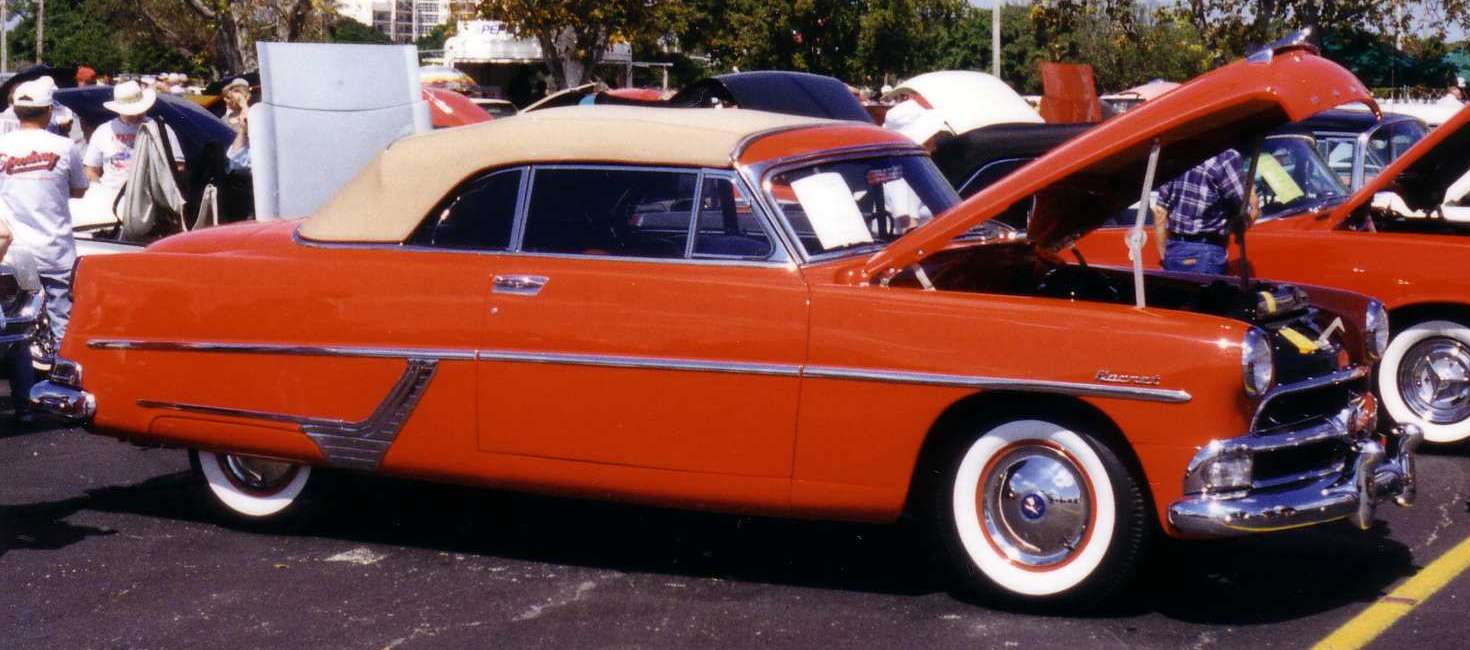
The thesis for collectors is simple: the 1954 Hornet is the end of a line, and the market sorts these cars by body style far more than by year. A sample of twelve Hornet sales compiled by Classic.com for the 1951 to 1954 cars shows a median of $37,400 and a range of $19,040 to $134,400. Hollywood hardtops sold for about $22,500 to $22,800 in October 2024. A 1954 Hornet sold for $45,000 in Hyannis, Massachusetts, on October 16, 2025, and a 1953 Twin H-Power club coupe brought $38,500 at Hershey a week earlier. A 1954 Convertible Brougham sold for $55,000 in January 2025, while a 1953 Convertible Brougham reached $134,400 the following month.
Treat that last figure as an outlier. Twelve sales is a small sample, not an index, and one exceptional convertible should not be read as a trend. The more durable signal is the gap between hardtops in the low $20,000s and open cars at $55,000 and above.
What to check before you buy
First, confirm the build date and model year against the serial number and any factory documentation, particularly on late 1954 cars, given the one-day disagreement among sources. Second, verify whether the dual-carburetor setup and any 7-X parts are original to the car, since those performance pieces were sold separately and are easy to add. Third, find out whether the car carries the Detroit-era build rather than a later Nash-based Hudson, which is a different machine with a different appeal.
For collectors drawn to the AMC side of the story, the merged company’s later cars have their own documentation resources, covered in our report on Fort Wayne American’s AMC documentation service.
Sources
Automotive History Foundation; Hagerty; Mac’s Motor City Garage; Old Cars Weekly; Wikipedia, Hudson Hornet; Classic.com.
The collector car market, every weekday morning.
Auction results, price moves and what’s crossing the block, read in four minutes. Free, from Modern Car Collector.
No spam, unsubscribe in one click. Or read more about the Brief.

 Kyle Matthews

