

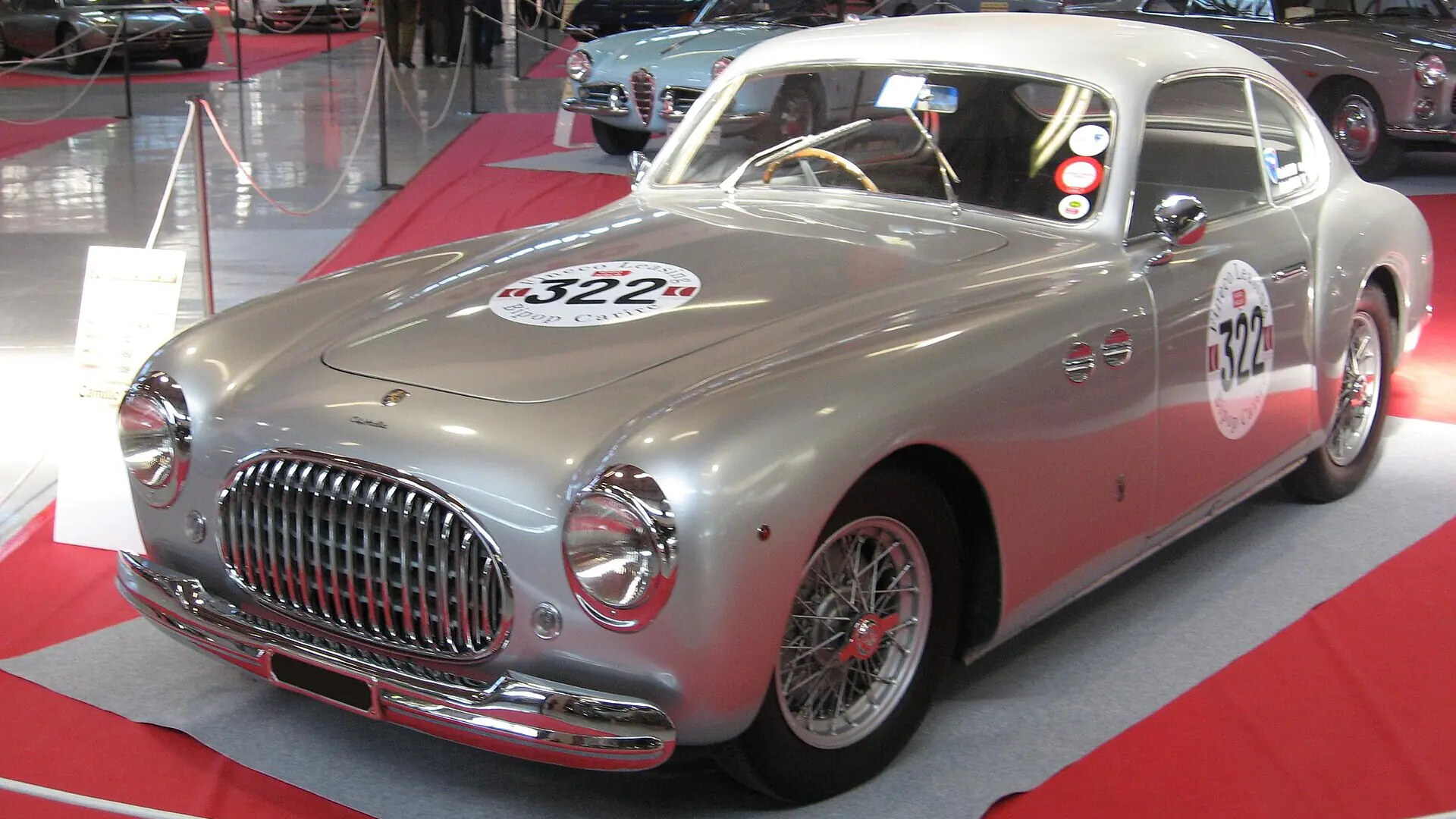
Piero Dusio was born on October 13, 1899. An Italian footballer, businessman and racing driver, he founded Cisitalia in Turin in 1946, and the car that carried the name, the 202, became one of the most admired postwar Italian designs.
The company and the car
Only about 170 Cisitalia 202s were built between 1947 and 1952, most of them coachbuilt by Pinin Farina, Vignale and Stabilimenti Farina. Dante Giacosa designed the D46 racing car that preceded it, and Giovanni Savonuzzi designed most of the 202. The cars used engines and suspension derived from a small Fiat, modified with dry-sump lubrication and other changes to raise output to roughly 60 to 70 horsepower. The 202 was not a commercial success because of its high cost.
In 1951 the Museum of Modern Art included the 202 in its Eight Automobiles exhibition, and it remains part of MoMA’s permanent collection.
Racing credentials
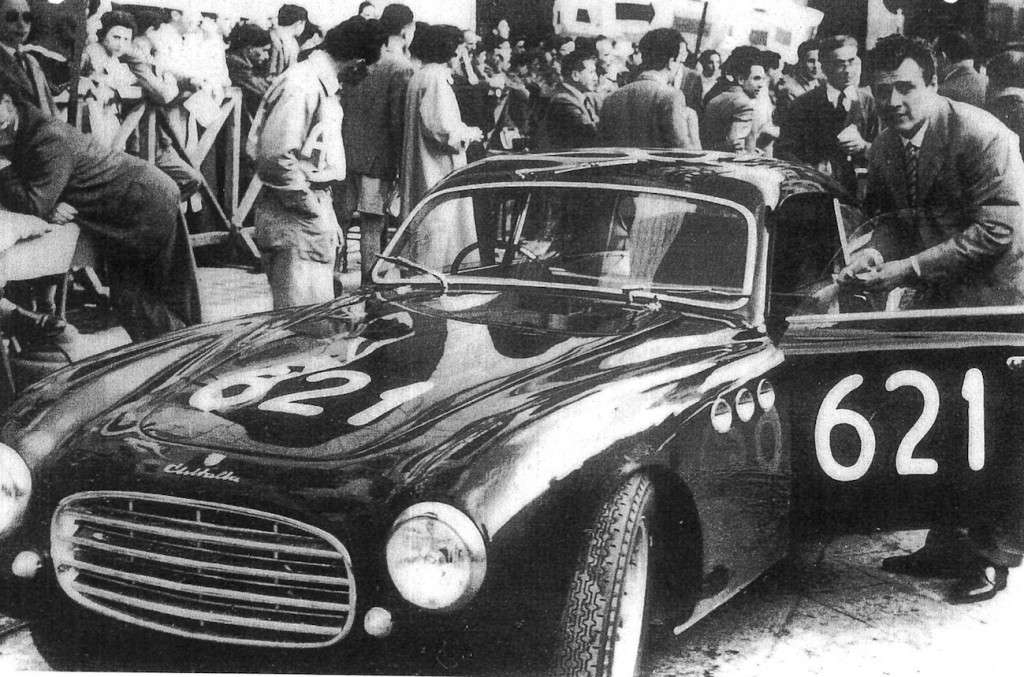
A Cisitalia spider driven by Tazio Nuvolari led most of the 1947 Mille Miglia until heavy rain caused trouble, finishing second overall and first in its class. The later competition spiders became known as 202 SMM Nuvolaris, and about 20 similar cars were built. Dusio’s ambition also extended to Grand Prix racing: the 360 project, designed by Ferry Porsche, was so expensive that it nearly bankrupted the company.
Why it matters to collectors
The 202 matters because three things that rarely overlap did: a Mille Miglia pedigree, a shape good enough for MoMA, and a founder who nearly sank his company chasing a Grand Prix car. For context on where the top of the market sits, see the ten most expensive classic cars ever sold at auction; its low production totals put it in the neighborhood of the machines in our guide to six of the rarest classic cars ever made.
Its Mille Miglia story connects to the later Ferrari era covered in our look at the Ferrari 250 GT LWB California Spider and the Fangio family 300 SLR.
Value context
We do not have a verified, current auction comparable for the Cisitalia 202 that we are willing to cite, so we will not offer a number. What is clear is that the car trades in a thin market where body style, coachbuilder, and documented history drive price far more than the mechanical package. Buyers should look for recent comparable sales from established auction houses before making any judgment.
What collectors should know
- Know the body. Most 202s were coachbuilt by Pinin Farina, Vignale or Stabilimenti Farina, and the coachbuilder affects desirability and value.
- Verify competition claims. Only about 20 202 SMM Nuvolari cars were built; any claim to that designation needs documentation.
- Respect the Fiat roots. The mechanicals are modest by design, so originality of the body and the supporting records carry most of the value.
The takeaway
Dusio built a company that nearly went broke chasing a Grand Prix car, yet the quiet little coupe it produced is the one that ended up in a museum. For collectors, the lesson is that the Fiat-derived engine was never the point: the shape and the paperwork carry the value.
If you could only have one, would you take the MoMA-grade coupe or a Nuvolari-era spider with the race history?
The collector car market, every weekday morning.
Auction results, price moves and what’s crossing the block, read in four minutes. Free, from Modern Car Collector.
No spam, unsubscribe in one click. Or read more about the Brief.

 Shawn Henry
  Kyle Matthews