

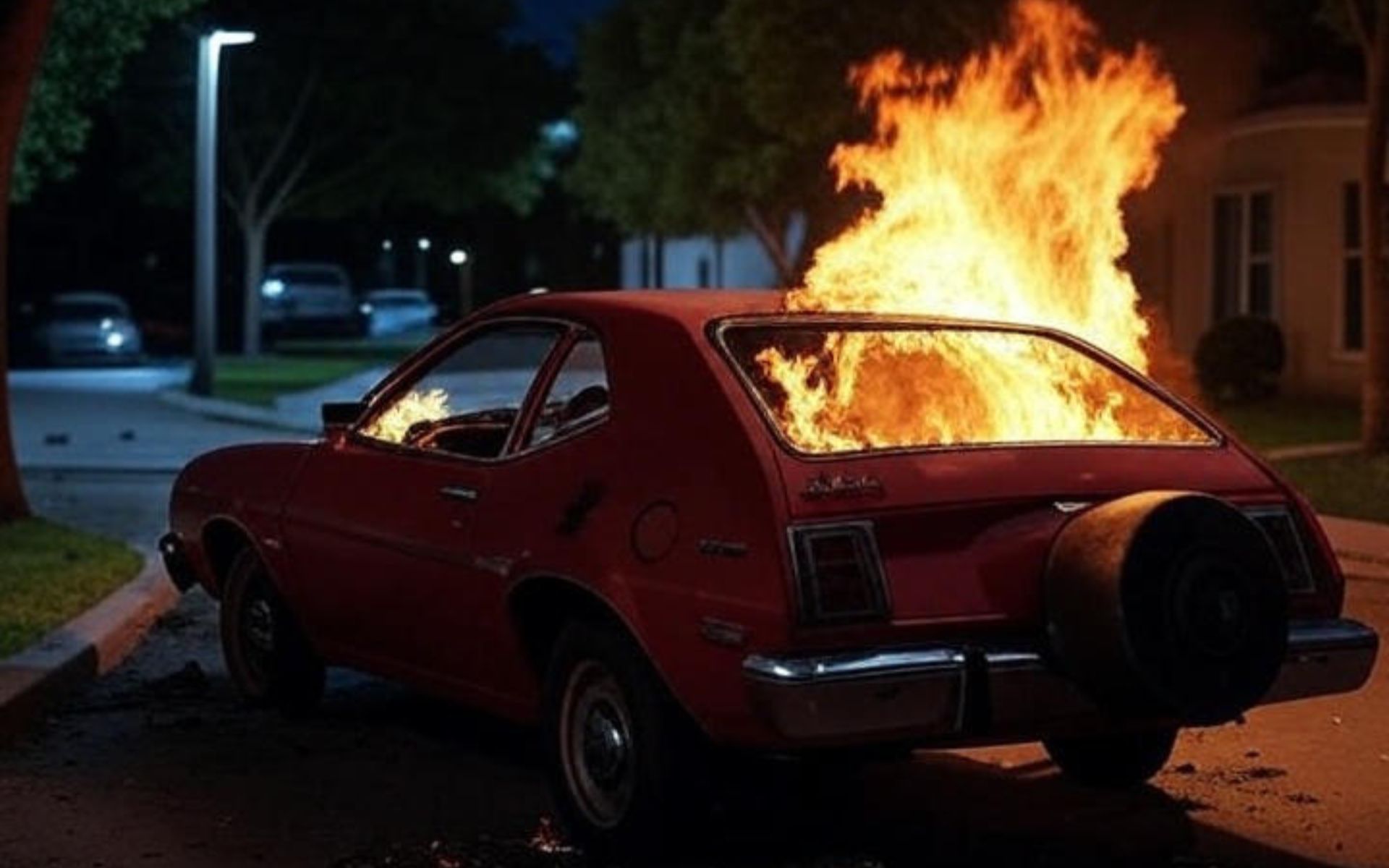
Five decades after Ford launched the Pinto to counter a tide of small imports, the compact’s fuel-tank fires and the courtroom fight that followed still echo through American product-safety law. Built quickly and to a strict cost target for the 1971 model year, the Pinto packaged its fuel tank behind the rear axle with scant crush space and no protective shield. In moderate rear-end crashes, internal hardware could pierce the tank, filler necks could tear free and spilled fuel could ignite—failures Ford engineers had flagged in pre-production testing, according to case records.
Proposed fixes in the development phase ranged from stronger structure to a longer filler neck and shielding. Plaintiffs later argued the solutions would have cost roughly $10 per car and were not adopted before launch. The risk moved from test tracks to headlines in 1972, when a Pinto stalled in Orange County, California, was struck from behind. Driver Lilly Gray died from burns; passenger Richard Grimshaw, then 13, survived with life-altering injuries. Their families sued, alleging Ford knew the fuel system was vulnerable and chose not to correct it.
Public outrage intensified when discovery highlighted an internal cost-benefit analysis—often dubbed, imprecisely, the “Pinto memo”—that used government dollar values for deaths and injuries to weigh the expense of engineering changes across a national vehicle fleet. Whether Pinto-specific or not, the optics were stark: a spreadsheet that appeared to place a price on human life.
In 1978, a California jury in Grimshaw v. Ford found the automaker liable, awarding compensatory damages and a then-record punitive sum designed to punish and deter. An appeals court later reduced the punitive award, but the decision’s message endured: manufacturers that consciously disregard consumer safety can face punishment beyond reimbursement. That same year, under federal pressure, Ford recalled 1971–1976 Pintos and Mercury Bobcats for fuel-system modifications. Regulators tightened fuel-system integrity standards, and automakers increased rear-impact protection with shields, improved filler-neck retention and more deformable structures behind the axle.
The Pinto saga became a staple of law-school casebooks and engineering ethics classes, marking a turning point in how courts and companies calculate risk. Legal scholars point to the case as an early, high-profile affirmation that punitive damages can apply when a company’s balancing of costs and hazards crosses into reckless indifference. In boardrooms and design studios, the lesson translated into earlier recalls, more conservative safety margins and a recognition that the “cheaper to settle than to fix” calculus can inflict reputational damage that far exceeds any line-item savings.
The Pinto was not the only unsafe car of its era, and debates continue over which documents fairly represented Ford’s corporate decision-making. But few episodes so clearly shifted expectations for how companies respond when tests predict preventable harm. From modern fuel-system designs to today’s recall playbooks, the compact car once billed as the fast, affordable answer to imports left a far larger imprint: a legal and cultural boundary around product safety that still shapes corporate behavior.
The collector car market, every weekday morning.
Auction results, price moves and what’s crossing the block, read in four minutes. Free, from Modern Car Collector.
No spam, unsubscribe in one click. Or read more about the Brief.




 Eve Nowell