

Most museum dispersals arrive with a safety net. The best cars carry reserves, the estate holds back what it cannot bear to sell cheaply, and the catalog quietly sorts the collection into cars that must sell and cars that may. The Tucson Auto Museum sale has none of that. On Jan. 28, 2027, Kruse Auctions will sell the entire collection at the museum itself, with every car and every piece of automobilia offered at no reserve. As with Russell’s Route 66 Museum before it, what comes out of the building will be priced by the room and nobody else.
That is the real story. The Batmobile will get the headlines and the Duesenberg will get the catalog cover, but the more useful thing this sale will produce is an unfiltered reading of what a regional private museum’s collection is worth when the curator steps aside. For collectors watching the steady run of museum closures, that number matters more than any single hammer price.
A museum built with its auctioneer
The Tucson Auto Museum was the work of Wayne Gould, a retired Tucson businessman whose taste ran to the unusual. The collection outgrew its original warehouse on South Cherry Avenue, and in 2024 Gould Family Properties bought the former Hidden Valley Inn on North Sabino Canyon Road, a building of roughly 25,700 square feet, for $2.76 million. The museum reopened there in April 2025. It will close on Jan. 1, 2027, and neither the museum nor Kruse has explained why.
One detail in Kruse’s announcement deserves more attention than it has received. The auction house says it helped grow this collection. The listings bear that out. In 2022, John Kruse brokered the private sale that moved the entire Batman Returns display from the Kruse Automotive and Carriage Museum in Auburn, Indiana, to Tucson. The same year, the museum acquired its Duesenberg from another museum’s collection sale, and Kruse himself drove the car on a tour that summer. So the house that is now dispersing the collection knows these cars better than any catalog writer could. Bidders should treat that as an asset and use it. Ask the specialists the questions they can answer from first-hand experience.
J-164: the rarest thing about it is what has not been done
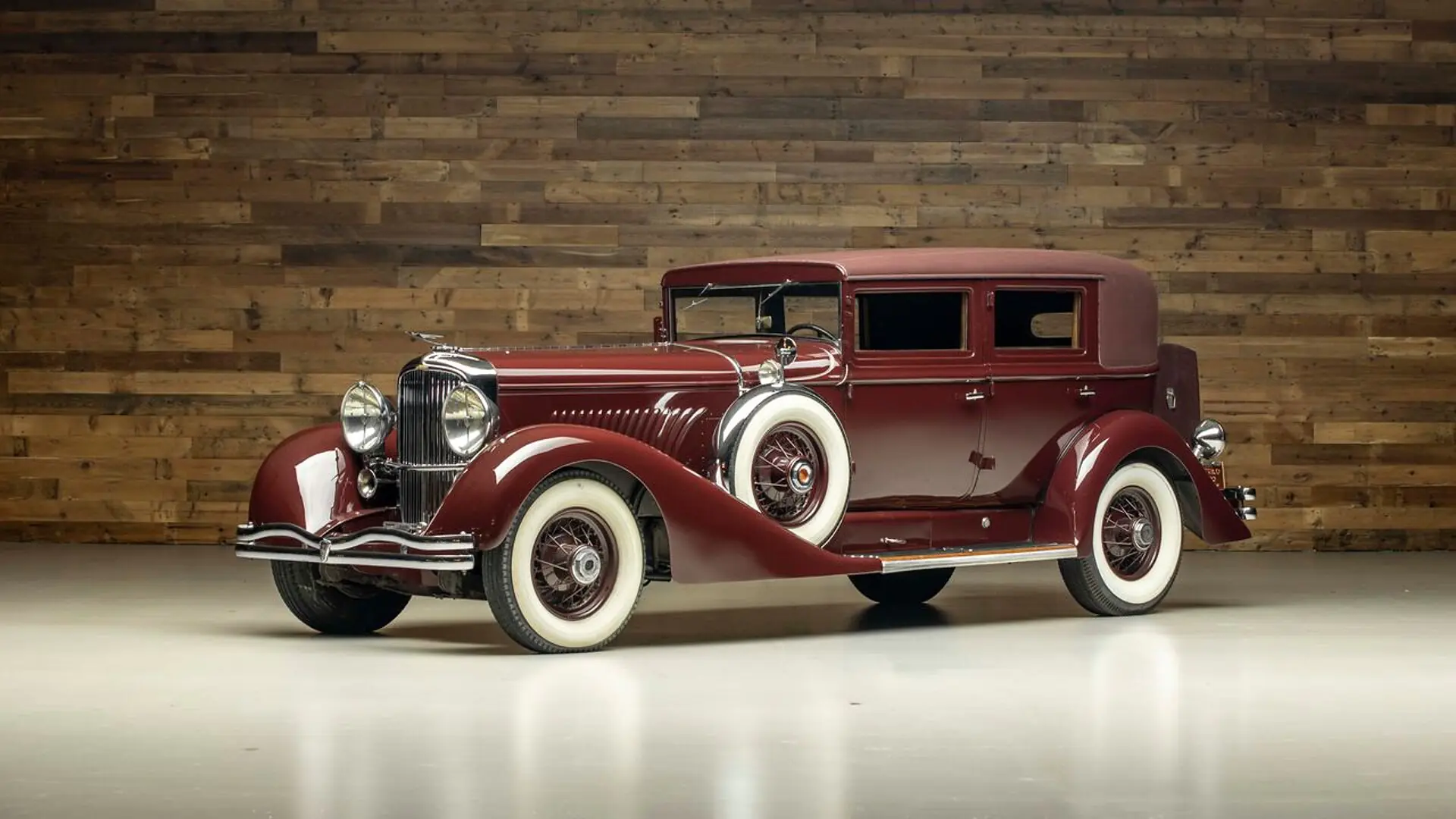
The 1929 Duesenberg Model J Arlington sedan is engine J-164 on chassis 2187, carrying Derham’s Arlington coachwork, a close-coupled sedan with blind rear quarters and a low roof. Kruse says only five Arlington sedans were built, four of them on the 142½-inch short-wheelbase chassis. The ACD Club certifies it as D-158 with its original chassis, engine, firewall and body.
Its provenance reads like a map of interwar money. It was sold new to Antonio Chopitea, a Peruvian sugar heir who kept homes in Lima, Paris and New York. It passed through Europe and then to Egypt, where Prince Hassan Loutfallah owned it from 1935, before coming back to the United States in 1957. It has had a long line of documented American owners since then, and the ownership file includes a 1995 letter from the Duesenberg historian Fred Roe.
Pedigree is not what sets J-164 apart, though. Plenty of Model Js have good stories. What this car has, and most of them do not, is an unbroken physical history. Kruse says it has never been disassembled or fully restored. It has been refinished cosmetically, reportedly in its original burgundy, but the interior is largely original and patinated. It won Most Original Car at the ACD Club’s national reunion in 1993. As we noted when examining a Murphy-bodied Duesenberg at Hershey, the hard questions about a Model J are usually about what was swapped, rebuilt or reimagined during decades of restoration. J-164 avoids most of those questions. In Duesenberg collecting, a car that has never come apart answers questions that a perfect restoration can only claim to answer.
Collectors should be clear about what that does and does not mean. A closed Derham sedan is not a dual-cowl phaeton, and it will not be priced like the open, celebrity-owned cars that set records, such as the Clark Gable Duesenberg at Monterey. Its buyer will be a collector who values evidence over drama. At no reserve, that buyer sets the price, and the result will show how much the Duesenberg market will pay for originality on a body style it has always underrated.
The Comet: a Pebble Beach car that has been shown only once
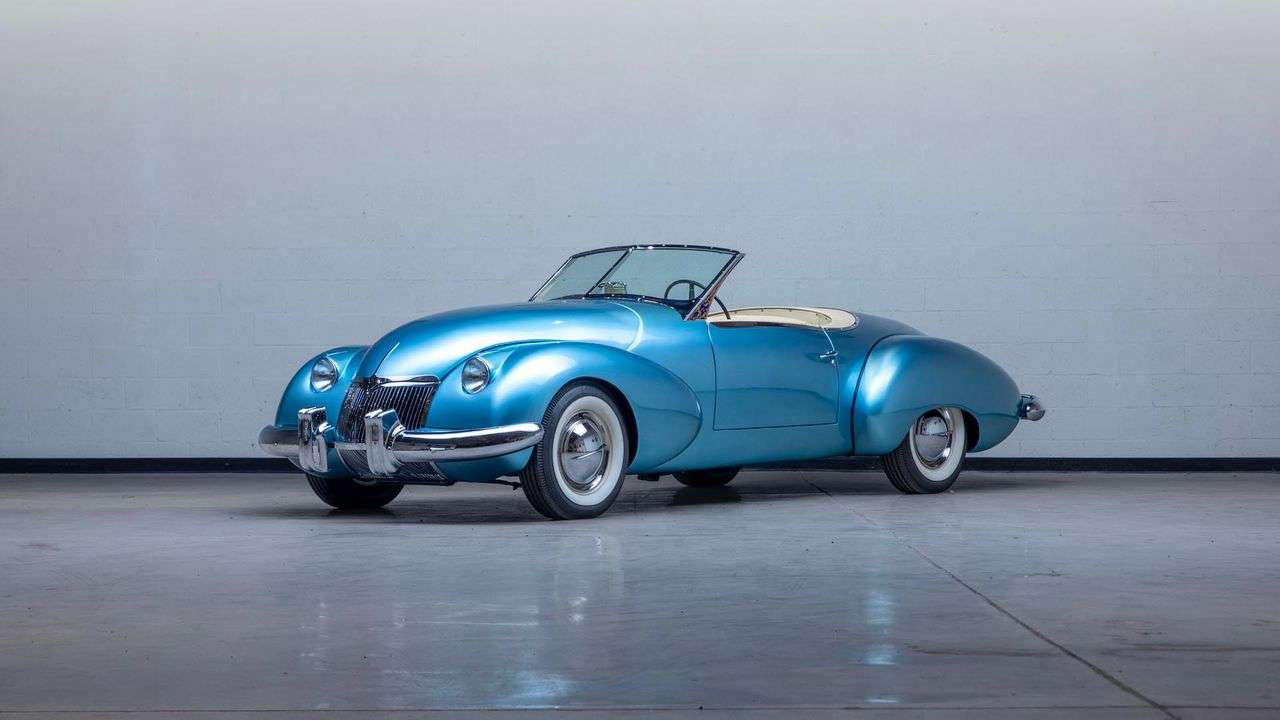
The 1948 Kurtis-Omohundro Comet is the car serious concours entrants should study most closely. Frank Kurtis drew it. Paul Omohundro, whose Comet Industries formed aluminum bodies for Kurtis-Kraft race cars, built the coachwork by drop-hammer over about a year. It sits on a modified Mercury chassis with a 346-cubic-inch Cadillac V-8 and a Hydra-Matic transmission. Only two were made, and this is the second, with a larger cockpit and a longer wheelbase than the 1947 car. In 1949 it got a full page in Road & Track.
It then spent more than 50 years in storage. The museum commissioned a multi-year restoration that kept about 95 percent of the original aluminum body, with Sciortino Customs doing the bodywork and paint and Vintage Motors of Sarasota handling the chassis. The car was shown at Pebble Beach in 2023 in the American Dream Cars of the 1950s class. Kruse says it has not been shown at any other concours since. For a buyer who wants to campaign a car on the show circuit, that is unusual: a fully documented, Pebble-proven restoration that is still eligible for its first appearance at Amelia Island, the Quail and their peers. Show eligibility is a commodity, and here it is being sold with the car.
The Dino, and why the paperwork matters more than the miles
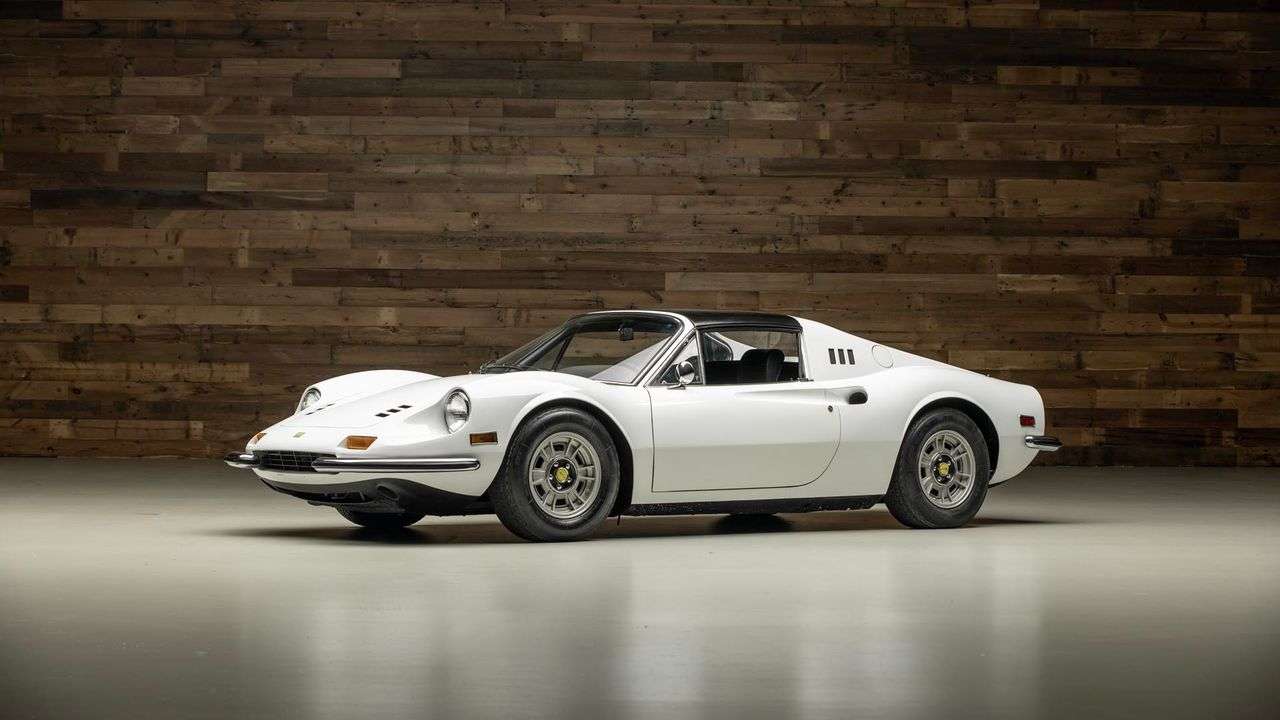
The Dino 246 GTS will draw the most predictable crowd. It was completed in May 1973 in Bianco Polo over black leather, with factory air conditioning, power windows and a Becker radio. It was delivered through Wolfgang Denzel in Vienna as a U.S.-specification car with an mph speedometer, and it shows under 21,000 miles. It spent 26 years with a Florida owner, and it comes with a 2026 Massini report.
Read the details carefully. The title is exempt from mileage disclosure, so the 21,000 miles is the seller’s belief rather than a certified figure. Kruse’s auction page calls the car a 1972, while the lot listing says 1973. The listing does not mention Daytona seats or flared arches, the options that separate the top tier of Dino values from the rest. None of that is alarming, but all of it should be settled before the hammer falls, because the Dino market has become unforgiving. As a recent RM London resale showed, a 246 GTS without a clear story can lose money even over a short holding period.
The middle of the catalog is where the value will be
The more interesting results may come from the cars between the headliners. Two in particular test whether hand-built hybrids can hold their value without a museum around them.
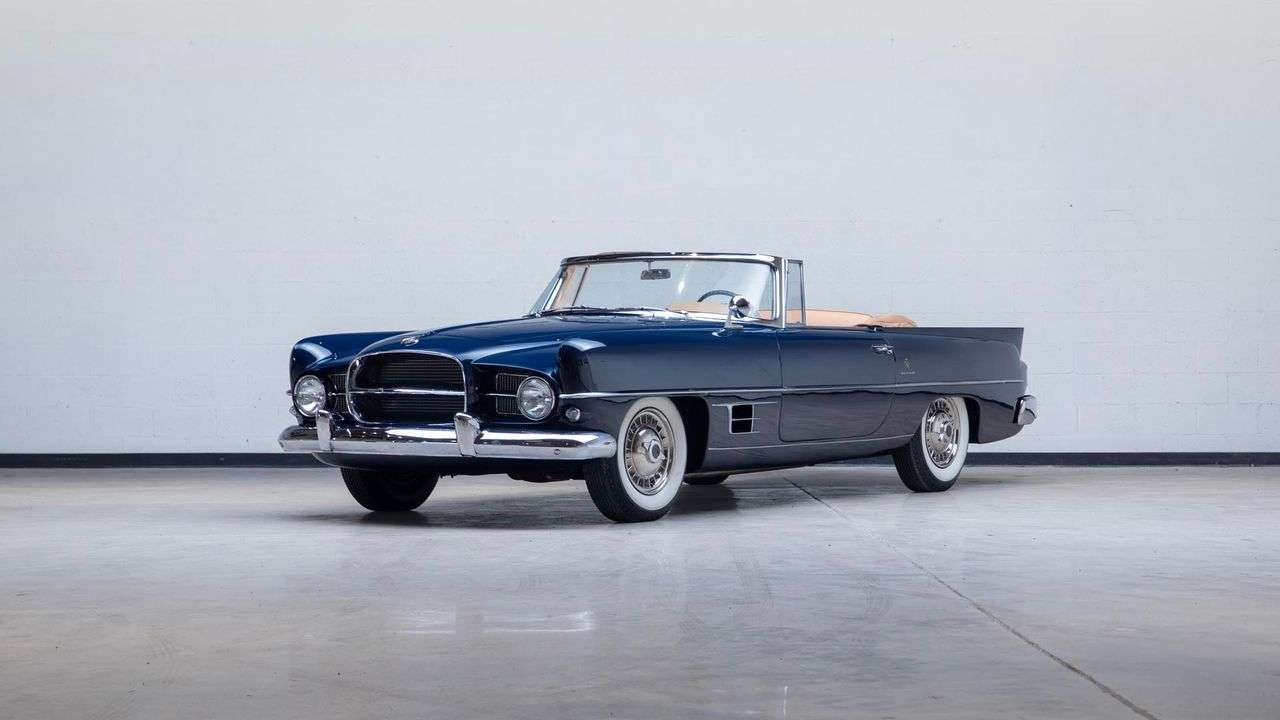
The 1957 Dual-Ghia convertible, No. DG128, is one of 100 built and, by Kruse’s count, among the first 30. It has its original date-coded 315-cubic-inch Dodge D500 Hemi. Its ownership chain includes Paul Sable, the Dual-Ghia historian and registry keeper, and the Houston collector John O’Quinn. The Dual-Ghia was a Detroit-to-Turin-and-back car that reportedly lost money on every example. Its customers were Hollywood and Rat Pack names, which explains its glamour. The registry-keeper ownership is what will matter to the buyer who already knows the marque.
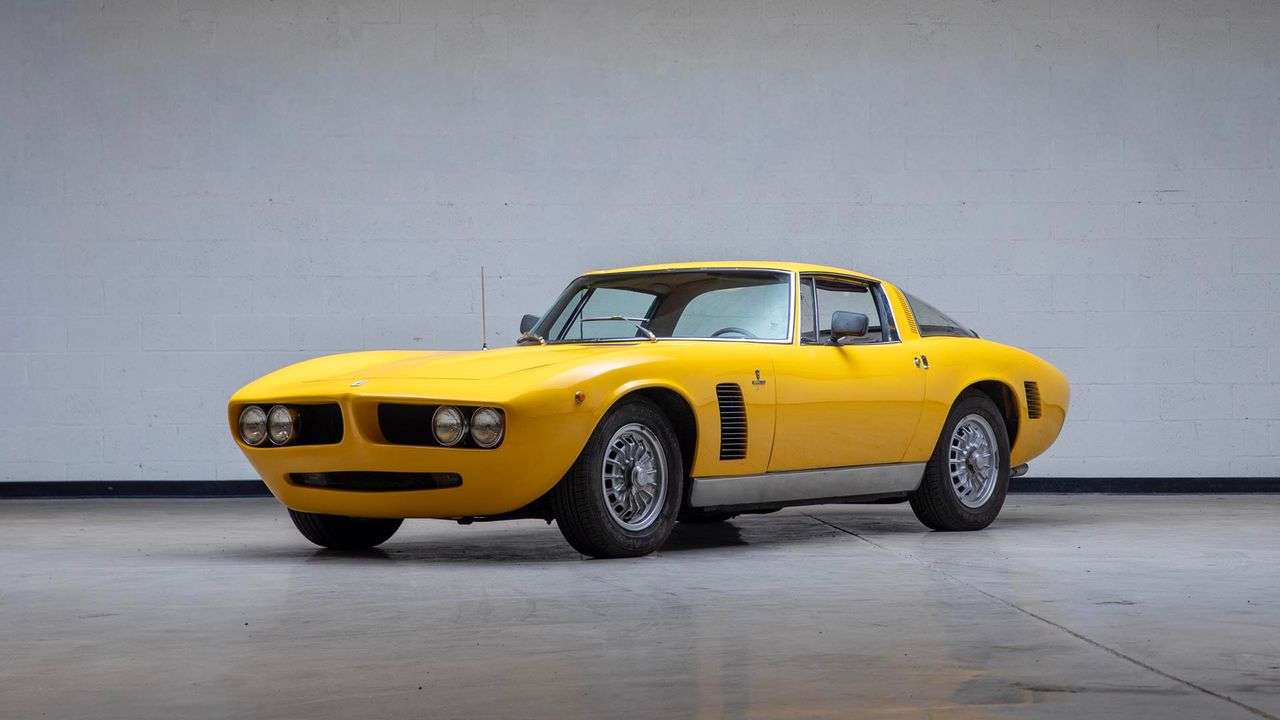
The 1967 Iso Grifo Series I needs more careful reading. It is described as the 37th of 200 Series I cars. It keeps its Borg-Warner T-10 four-speed and Campagnolo wheels, and it was named best unrestored car at the 2015 Indianapolis Motor Speedway Invitational. The same listing says it was repainted from black to Fly Yellow and had its 327 rebuilt in the late 2000s. Both can be honest descriptions of the same car, but “unrestored” is doing a lot of work in that sentence. Bidders should value the Grifo for the Bizzarrini-designed, Giugiaro-styled car it is, not for an originality label that its own history complicates.
Below these sit a 1960 Alfa Romeo Giulietta Sprint Speciale, a numbers-matching 1964 Porsche 356 C in Light Ivory, a 4,000-mile 2012 McLaren MP4-12C, and more than 20 microcars, including a Zündapp Janus from the Bruce Weiner Microcar Collection. That last group is where no-reserve selling tends to reward patient buyers. Microcars depend on a small and enthusiastic audience. When 20 of them sell on one afternoon in Tucson, supply will briefly run ahead of demand.
The Batmobile is a license, not a car
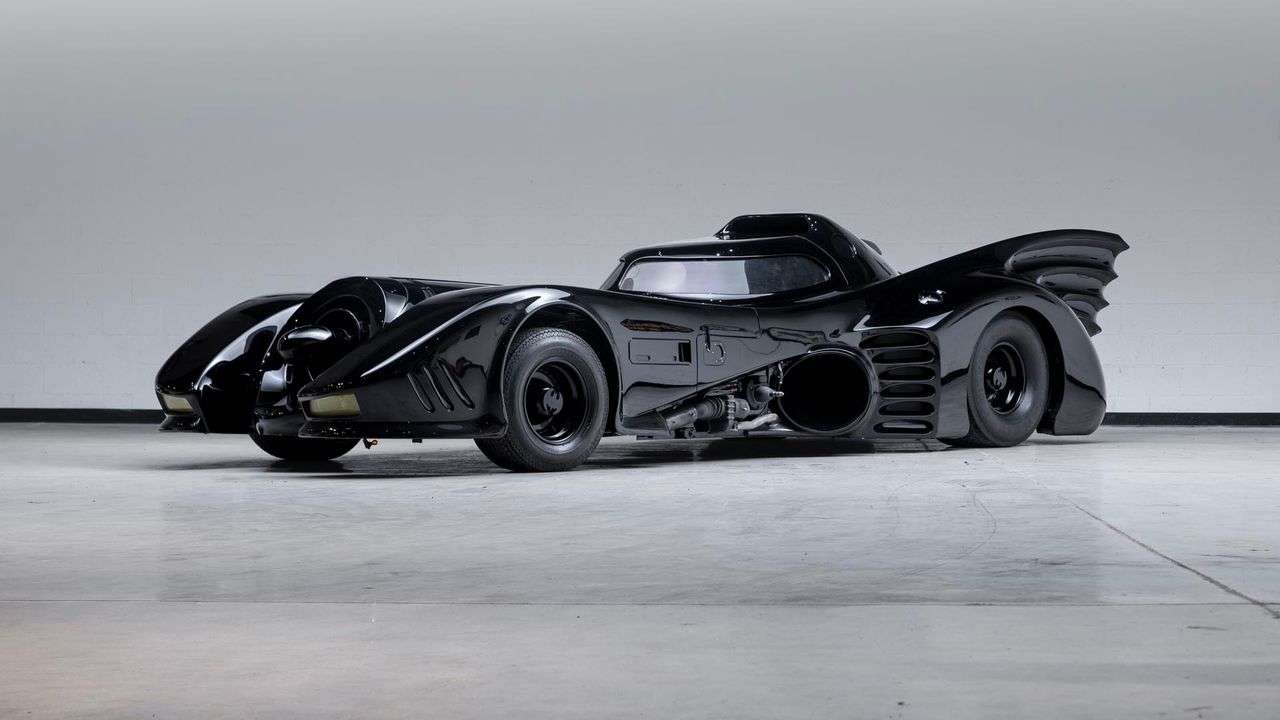
The 1992 Batman Returns Batmobile will draw cameras. Collectors should understand what it is. It is one of a limited number of licensed promotional cars that Carl Casper’s Hollywood Productions built for exhibition. Its tag reads “BATMAN RETURNS EXHIBITION #03.” Underneath is a stretched Impala chassis with a small-block Chevrolet. It is not street legal and is sold on a bill of sale only, and bidders must be approved and agree to special sale terms before bidding. We have written before about how Warner Bros.’ terms shape a Batmobile’s value. The same reasoning applies here. With a licensed car, the buyer is purchasing the right to display and enjoy an image, and the conditions on that right deserve as much attention as the fiberglass. The licensed 1966 Batmobile replica by Fiberglass Freaks of Logansport, Indiana, which sells alongside it, should be judged the same way.
What serious buyers should do before Jan. 28
The preview runs at the museum from Jan. 23 to 27, 10 a.m. to 4 p.m., during Arizona Car Week, when most of the national market is a two-hour drive away in Scottsdale. That timing is a gift to buyers. Tucson will be competing for attention with the week’s larger American auctions, and a no-reserve sale held away from the main tents can produce prices the main tents would not. As of this writing, Kruse has not published a buyer’s premium for the sale. Confirm it before registering, and request the documentation files for the Duesenberg, Comet and Dino in advance. Each one has a substantial file, and in each case the file is where the value lies.
What the result will tell us
Private museums like this one are rarely permanent. They are long holding periods with an admission fee. The Duesenberg proves it: before Tucson it belonged to the Maine Classic Car Museum, and before that to a line of private owners going back to Peru. Collections such as the Harrah cars and the Eendenmuseum’s 2CVs have shown that the market cares less about where a car was displayed than about what was done to it there. Tucson’s best cars were looked after well. The Comet was rescued, the Duesenberg was left alone, and the Dino was barely driven.
Without reserves, Jan. 28 will show plainly which of those choices the market rewards. Our expectation is that originality and documentation will win, and that novelty will be marked down. Either way, the result will be an unusually clear data point for every collector who has wondered what museum provenance is worth once the museum is gone.
Sources: Kruse Auctions, Tucson Auto Museum Liquidation Auction and individual lot listings; Old Cars Weekly; KGUN 9; Cushman & Wakefield | PICOR. For the museum’s closing, see Backfire News.
The collector car market, every weekday morning.
Auction results, price moves and what’s crossing the block, read in four minutes. Free, from Modern Car Collector.
No spam, unsubscribe in one click. Or read more about the Brief.


 Shawn Henry